Article
How Many Hours Should You Actually Drive Before a Break?
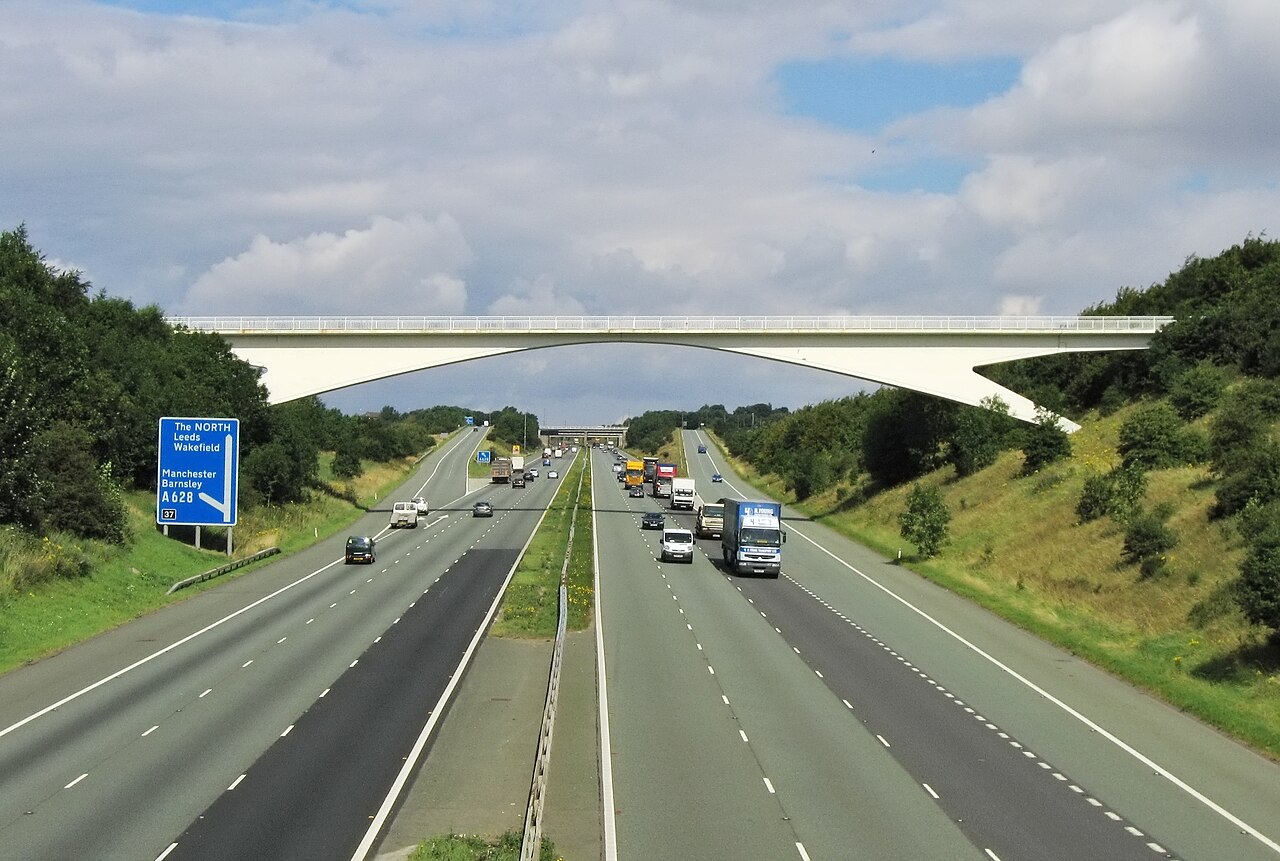

An electric car forces a stop roughly every two hours on a long motorway day. Whether that is an inconvenience or a hidden benefit depends entirely on what fatigue actually does to a driver over that same stretch — which is a much better-studied question than most people assume.
What fatigue actually does behind the wheel
Fatigue is not simply "feeling tired." Simulator research into driver fatigue and highway driving has measured how performance degrades on long, monotonous stretches specifically — the kind of driving a motorway trip is made of, with steady speed, low steering demand and few decision points [6]. That combination is precisely what accelerates fatigue, because it removes the stimulation that keeps a driver alert without removing any of the risk.
Road safety research reviewing the evidence base more broadly reaches a consistent conclusion: fatigue-related crashes are under-reported relative to their true frequency, because a driver who falls asleep briefly rarely reports it as the cause even when it plainly was [2]. Clinical literature on fitness to drive treats fatigue as a measurable impairment with effects on reaction time and lane-keeping that are comparable in scale to modest alcohol impairment — a comparison worth taking seriously precisely because it sounds alarmist and is not [1].
Professional drivers are the canary, not a special case
Most of the strongest data on driving fatigue comes from professional drivers, because they are the population studied most closely and because their hours are logged. A survey of truck and taxi drivers found fatigue to be a routine, not exceptional, feature of long working days on the road — and a separate analysis of commercial truck drivers found that the number and pattern of rest breaks taken across a duty period measurably affected crash risk, with breaks that were too infrequent or too short showing up directly in the outcome data [4][5].
None of this is a professional-driver-only phenomenon. It is evidence gathered from people who drive far more than the rest of us, doing on a larger scale exactly what happens to anyone on a six-hour motorway leg. The mechanism — monotony plus duration eroding vigilance — does not check your job title.
What this means for an EV road trip
This is where the charging schedule becomes relevant. A combustion car makes stopping optional: fill up in five minutes at the start of a long day and, fuel permitting, drive the rest of it non-stop. An electric car does not offer that option on a genuinely long journey. It needs a charging stop roughly every couple of hours on typical motorway consumption, which happens to land close to the interval that rest-break research associates with lower crash risk on long duty periods.
That is a coincidence of physics and chemistry, not a safety feature anyone designed in. But it means the "inconvenience" framing that dominates EV road-trip complaints has the sign wrong for a meaningful share of drivers — particularly on trips long enough, and late enough in the day, that fatigue would otherwise be creeping in unmanaged.
A framework for the drive, not just the charge
The car will tell you when the battery needs a stop. It has no idea whether you do. Use the table below alongside it rather than instead of it — a fully charged car does not mean a rested driver.
| Time on the road | What the evidence suggests | What to actually do |
|---|---|---|
| 0–2 hours | Vigilance typically still intact on a well-rested start | No action needed beyond normal awareness |
| 2 hours | Close to where rest-break research shows benefit on long duty periods | Take the stop even if the battery does not strictly need it yet |
| 3–4 hours, no break taken | Monotonous-highway studies show measurable performance decline in this range | Stop is no longer optional — pull in at the next safe option, not the next planned one |
| After dark, any duration | Fatigue and low-stimulation night driving compound | Shorten the interval between stops; treat the charging car as a floor, not a target |
| Any point with concentration lapses, missed exits, or drifting | Recognised warning signs in the fatigue literature | Stop immediately — these are not "push through" signals |
The middle two rows are where an EV's forced cadence does the most good on its own. The bottom two are where it does not — the car will happily let you drive on a nearly-full battery well past the point your attention has checked out, especially after dark.
Where to stop matters as much as when
A stop that is a genuine break — somewhere to walk, eat and see other people — restores alertness more than one spent sitting in the car scrolling a phone while it charges. That is a separate case for choosing chargers attached to somewhere worth stopping, which our companion site on motorway food covers in more detail.
Common questions
Does an EV actually make long drives safer?
I don't feel tired — can I skip a stop?
Is night driving really that different?
What if the car doesn't need to charge for another hour, but I've been driving for two?


Related reading
References
Every citation below links to the original peer-reviewed record on PubMed or via DOI. Nothing here is a substitute for medical advice.
-
[Effect of fatigue on the fitness to drive] Makowiec-Dabrowska T, Bortkiewicz A, Siedlecka J, et al. · Medycyna pracy · 2011 · Review PubMed 21870418
-
Road safety research in China: review and appraisal Wang P, Rau PL, Salvendy G · Traffic injury prevention · 2010 · Review DOIPubMed 20730690
-
Physiological signal analysis for fatigue level of experienced and inexperienced drivers Li R, Su W, Lu Z · Traffic injury prevention · 2017 · Journal article DOIPubMed 27589585
-
Driving fatigue in professional drivers: a survey of truck and taxi drivers Meng F, Li S, Cao L, et al. · Traffic injury prevention · 2015 · Journal article DOIPubMed 25357206
-
The impacts of multiple rest-break periods on commercial truck driver's crash risk Chen C, Xie Y · Journal of safety research · 2014 · Journal article DOIPubMed 24529096
-
Driver fatigue and highway driving: a simulator study Ting PH, Hwang JR, Doong JL, et al. · Physiology & behavior · 2008 · Journal article DOIPubMed 18402991